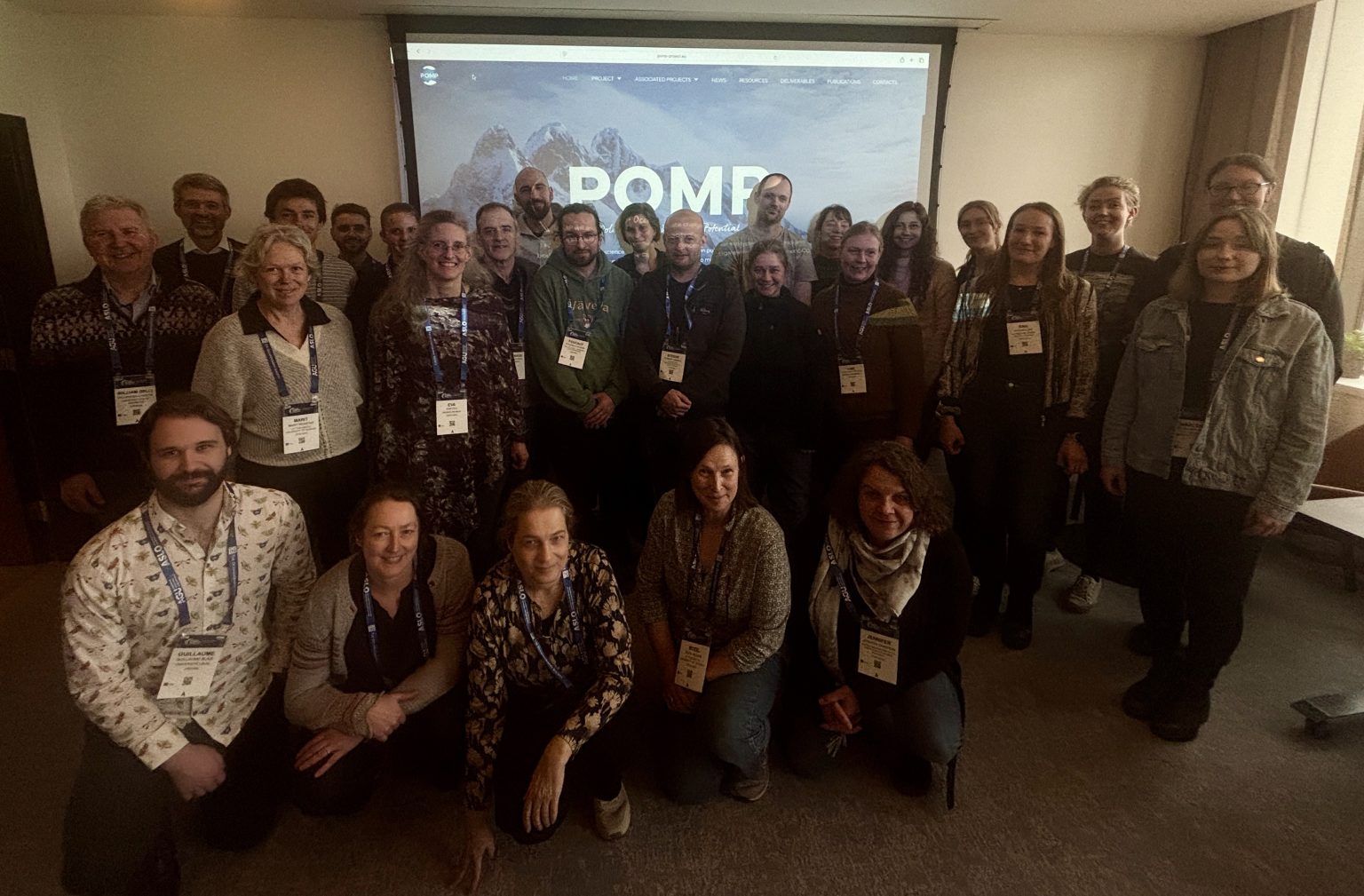
The POMP consortium gathered in Glasgow on 24 February 2026 for the project’s 2nd Annual Meeting, held alongside the Ocean Sciences Meeting. Partners from across Europe and Canada came together to review progress, align next steps, and strengthen coordination across work packages as POMP advances its work on the climate-mitigation potential of polar marine ecosystems.
The meeting agenda combined work package updates with dedicated discussions, giving teams more time for detailed task-level exchanges. The focus on cross-work-package dialogue supported a shared view of priorities for the coming months, including key deliverables and scientific synthesis linking coastal and open-ocean processes.
POMP coordinator Mikael Sejr (Aarhus University) thanked participants for an engaged and constructive meeting:
“I found the meeting very constructive and informative, particularly the opportunity to dedicate more time to detailed discussions within each task and to strengthen coordination across the work packages.”
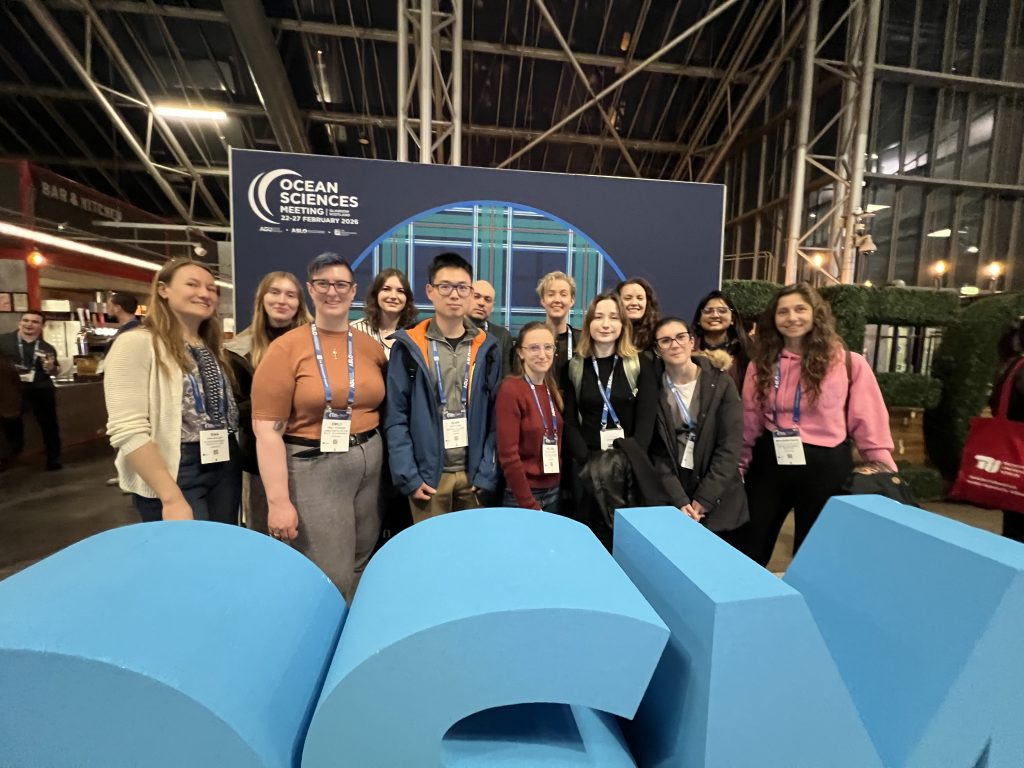
The annual meeting also provided an opportunity to strengthen connections beyond the project itself. Following the Ocean Sciences Meeting, early-career researchers (ECRs) from POMP met with ECRs from the sister project Sea-Quester for an informal evening gathering. Around 20 researchers joined the discussion, exchanging updates on their work, identifying shared scientific challenges, and exploring opportunities for collaboration.
The initiative is part of a growing ECR network between the two projects, coordinated by Emily Stidham (Sea-Quester) and Maya Dalby (POMP). The network aims to provide a platform for regular exchanges on research progress, foster collaboration across projects, and create space for sharing experiences of working in international research environments. Online meetings have already begun and are expected to continue approximately every six months.
“You are truly the engine of this project, and your contributions and participation are something I am sincerely grateful for,” Sejr added, addressing the project’s early-career researchers.
Looking ahead, the consortium also discussed preparations for the project’s upcoming 24-month evaluation and the expanding pipeline of outputs expected in the second half of the project.
As highlighted during the meeting, POMP is moving toward a robust portfolio of scientific publications and impact products that will contribute to improving understanding and management of polar blue carbon and biodiversity.
POMP (Polar Ocean Mitigation Potential) is funded by the European Union and works to improve quantitative knowledge of polar carbon sinks and biodiversity, helping inform future assessment and management of these rapidly changing ecosystems.