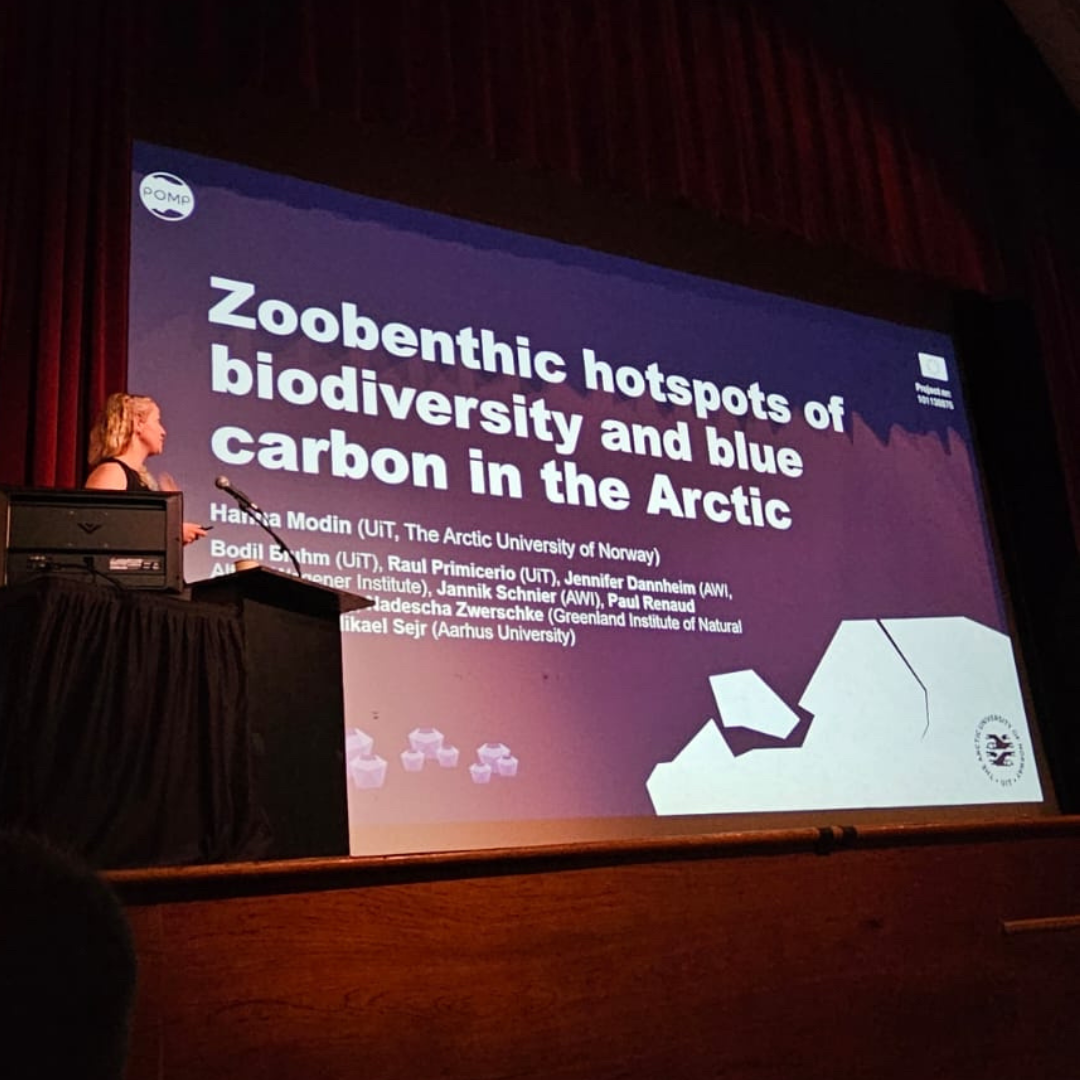
PhD student Hanna Modin from UiT The Arctic University of Norway, represented the POMP project at the GeoHab 2025 conference in Key West, Florida. Awarded a scholarship to attend, Modin co-moderated two sessions and presented early findings from POMP in the session dedicated to Polar and sub-polar environments.
GeoHab 2025 focused on habitat mapping in a time of climate change. Against this backdrop, Modin’s talk explored how climate-driven environmental shifts are shaping benthic ecosystems in the Arctic Ocean.
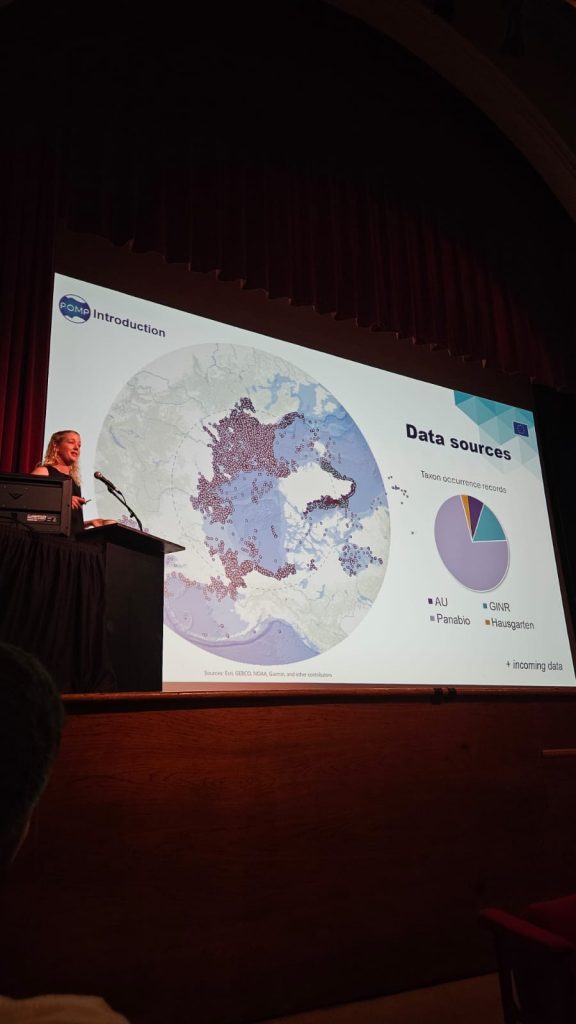
Her presentation, titled Zoobenthic hotspots of biodiversity and blue carbon in the Arctic, showcased work conducted in collaboration with researchers from UiT, AWI, Akvaplan-Niva, Greenland Institute of Natural Resources, and Aarhus University. The study leverages taxonomic data from multiple Arctic expeditions to identify biodiversity-rich regions that may also play key roles in carbon storage.
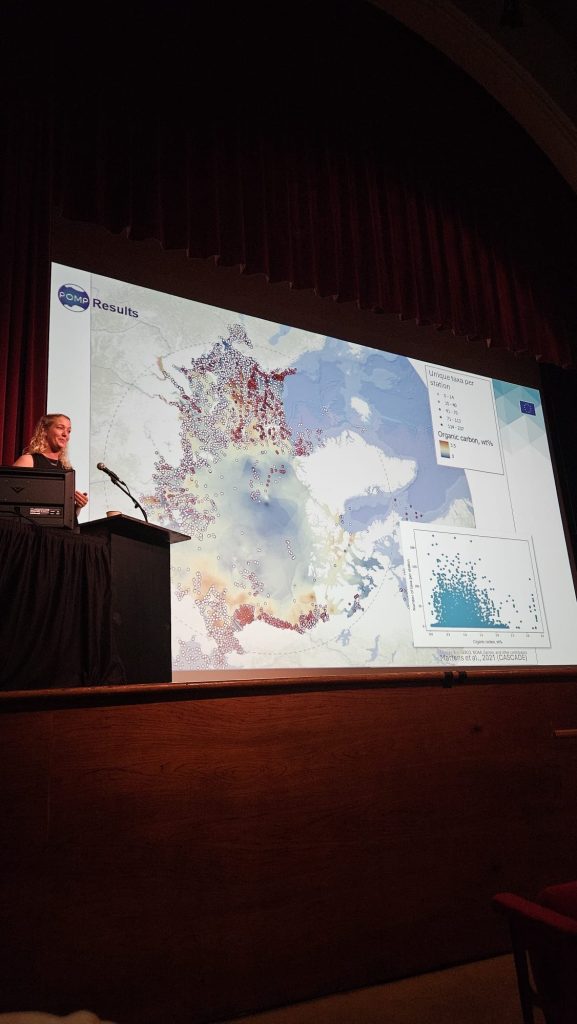
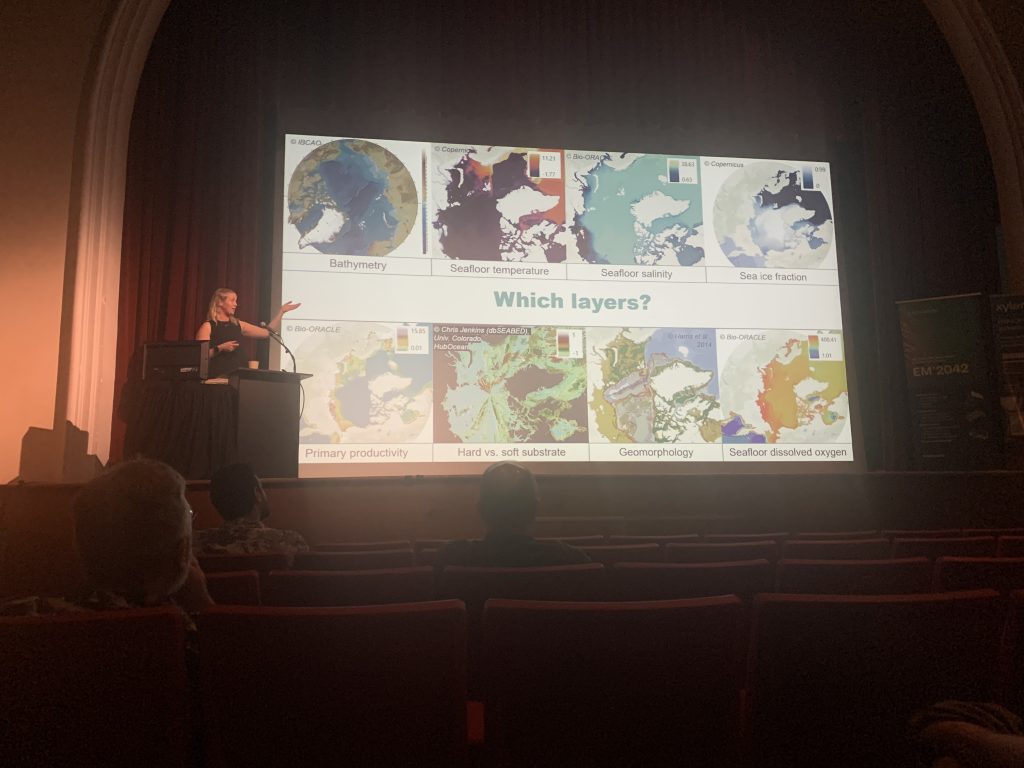
The team analysed over 279,000 benthic occurrence records spanning various size classes—from large megafauna to microscopic meiofauna. By integrating biological data with geomorphological and environmental layers such as seafloor temperature and primary productivity, they identified preliminary hotspots of both biodiversity and potential blue carbon.
The presentation highlighted both the promise and the challenges of working with heterogeneous datasets and outlined next steps including habitat classification and model refinement. As Arctic waters continue to warm at four times the global average, identifying and protecting these benthic hotspots becomes increasingly urgent—both for biodiversity and for climate mitigation.