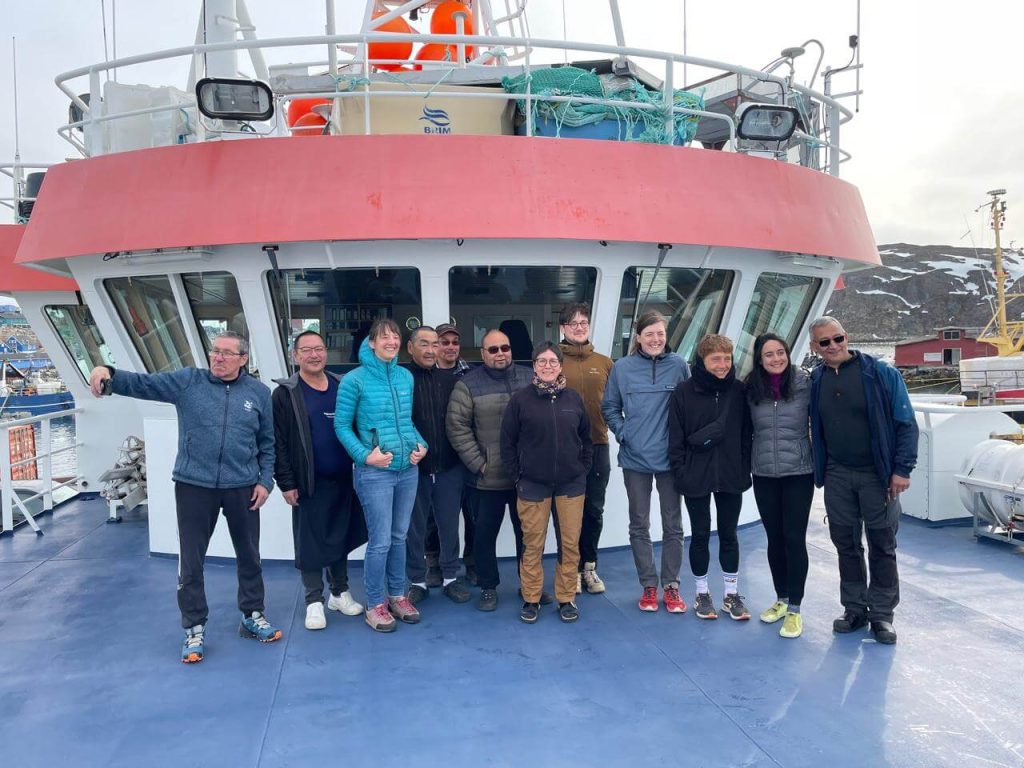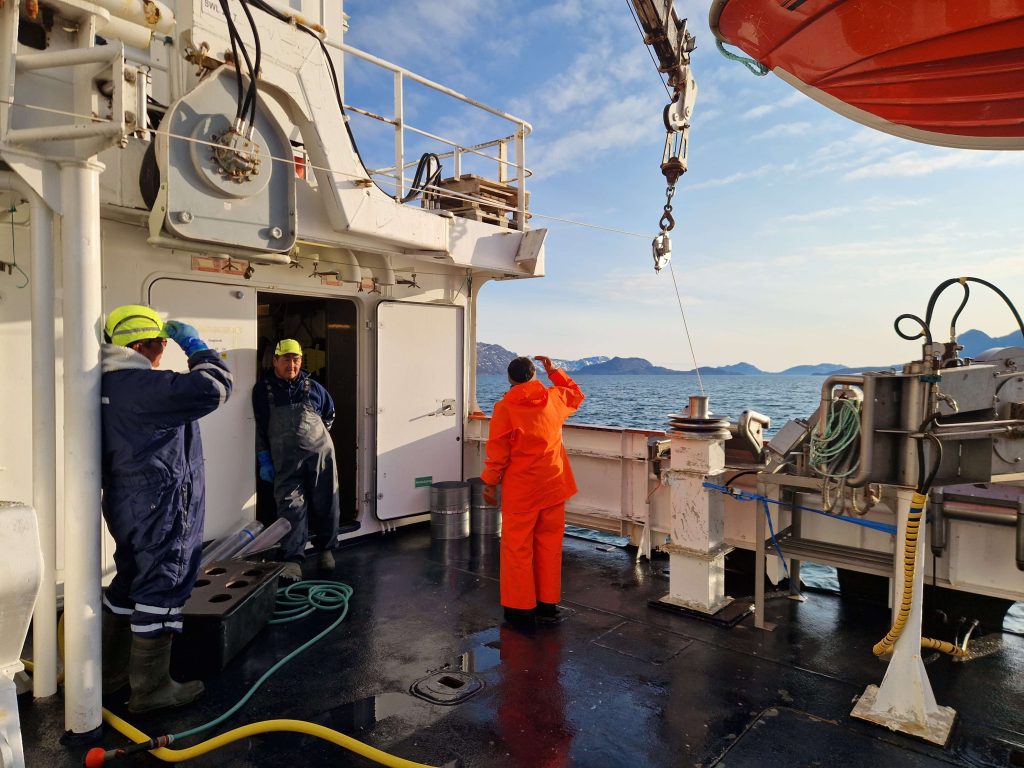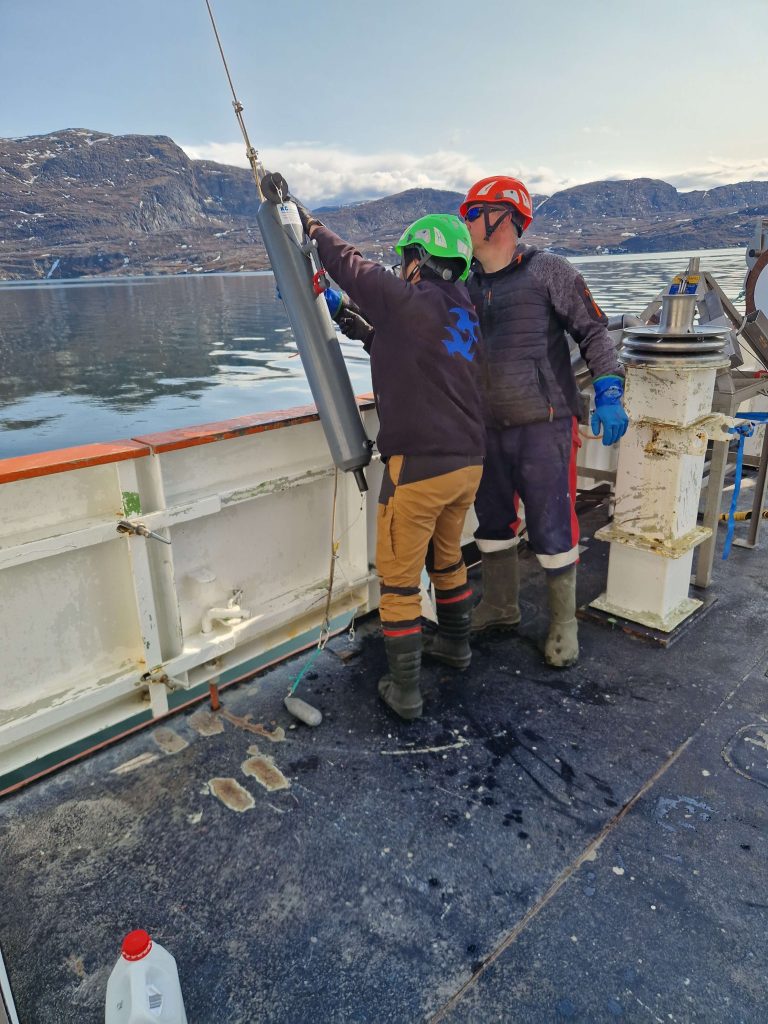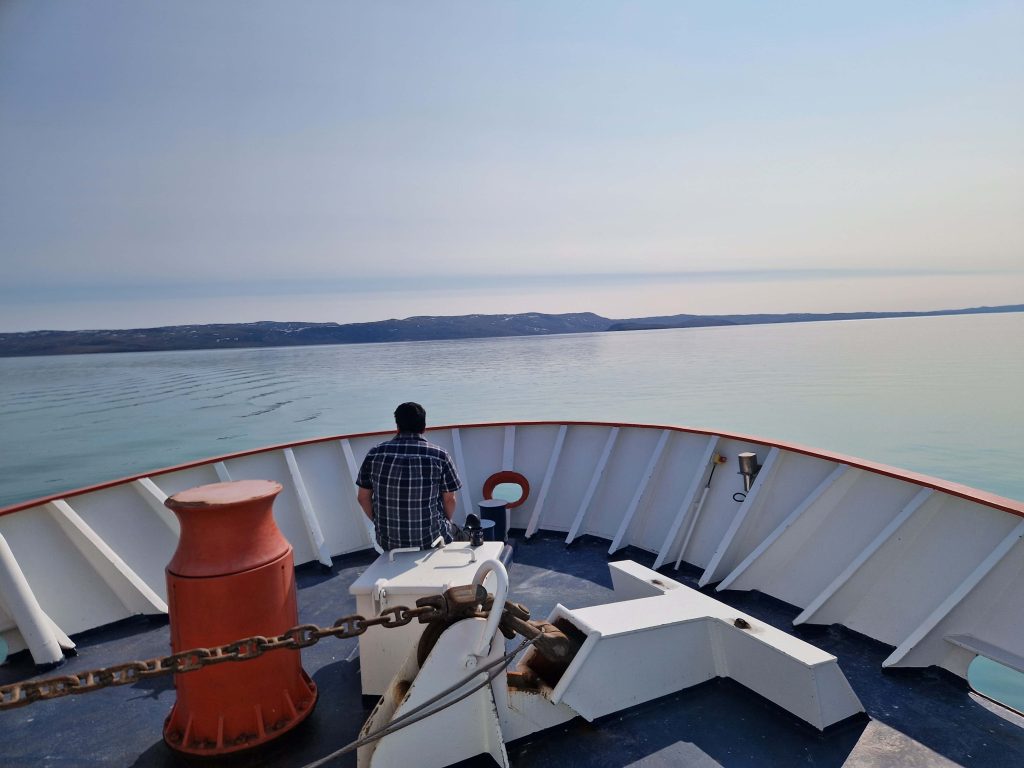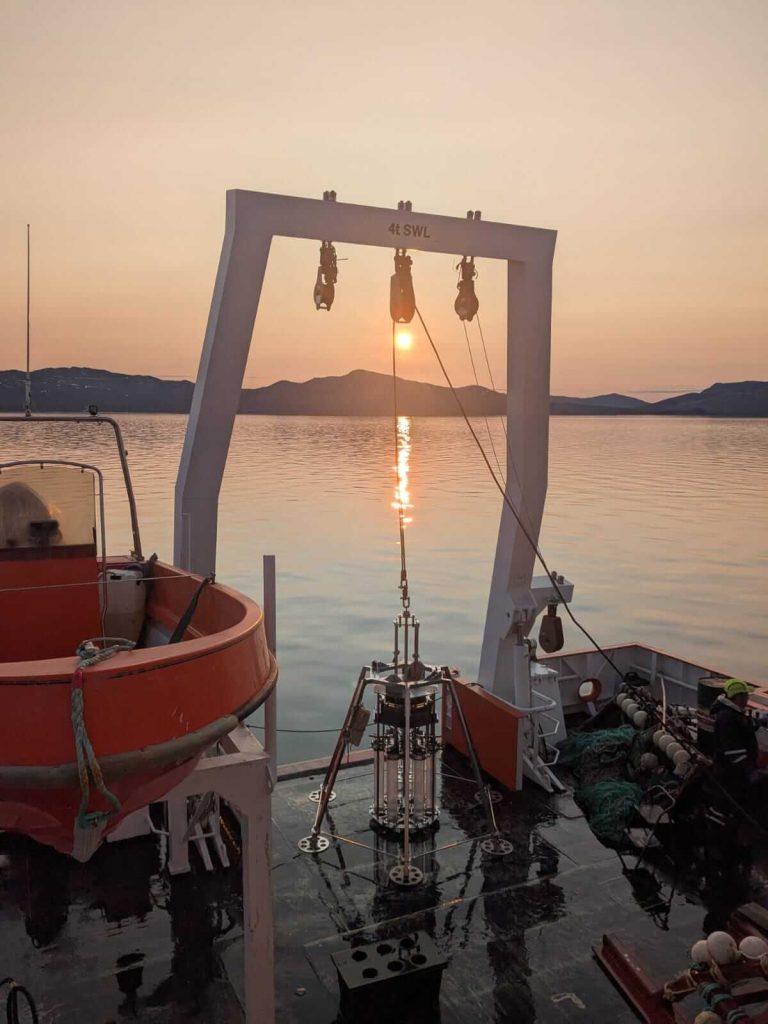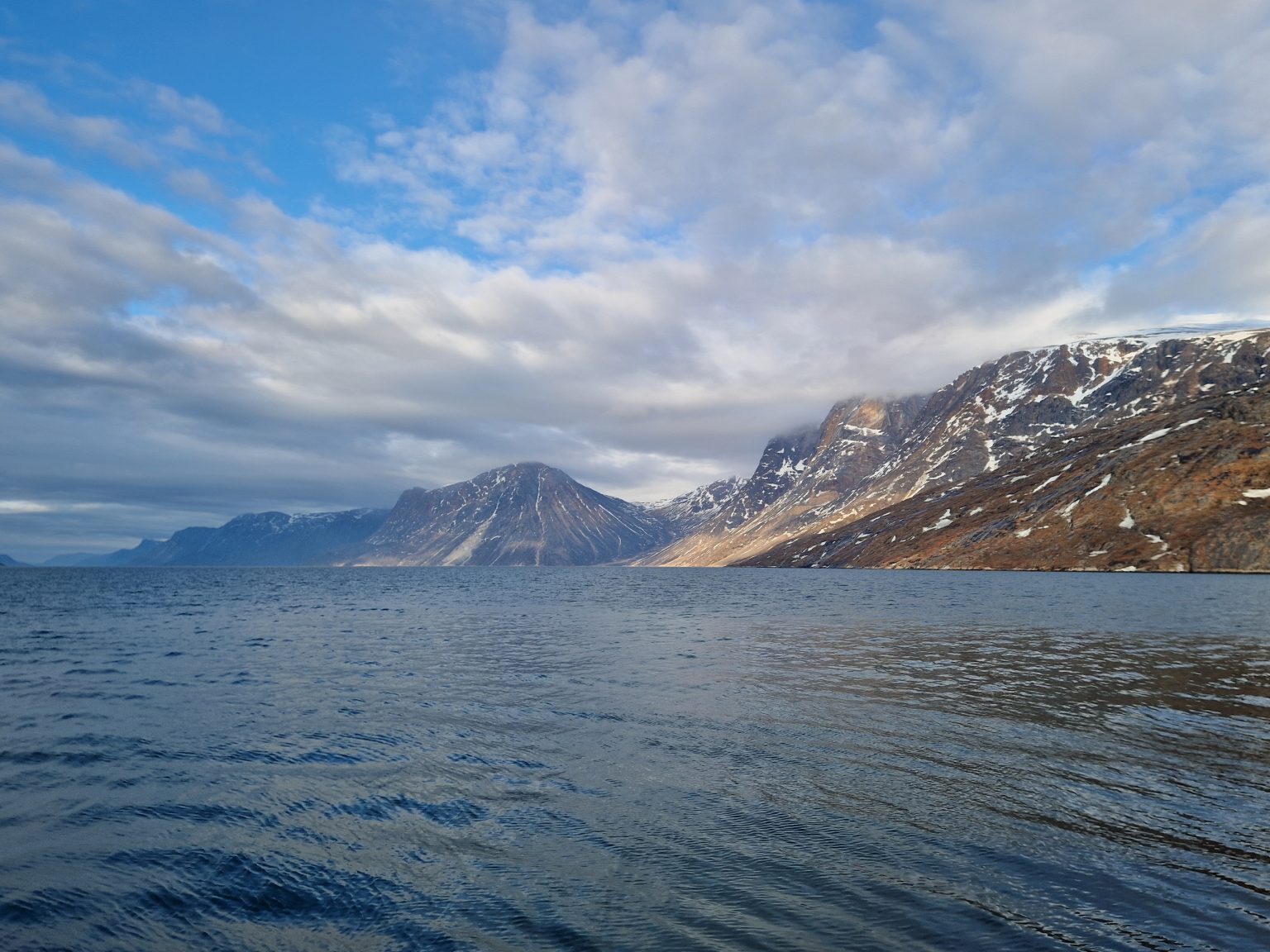
From June 5–11, 2025, the POMP team joined the 2025_SA_05 research cruise to investigate understudied fjord systems in West Greenland. The fjords in the Qeqqata and Qeqertalik regions are vital fishing and hunting areas for local communities and support a valuable snow crab fishery. They are also potential hotspots for blue carbon — an important but still poorly quantified part of the polar carbon cycle.
The cruise aimed to advance our understanding of biodiversity and blue carbon dynamics in Greenland’s coastal fjords. Researchers focused on changes in community composition (both infauna and epifauna), blue carbon potential under different climate scenarios, and how biological patterns are shaped by environmental factors.
Over the week, the team completed extensive fieldwork across five work packages:
- Geomorphology: Multibeam surveys mapped previously unsurveyed regions, including Arfersiorfik fjord.
- Epibenthos: Video transects captured seafloor communities along the length of the fjords.
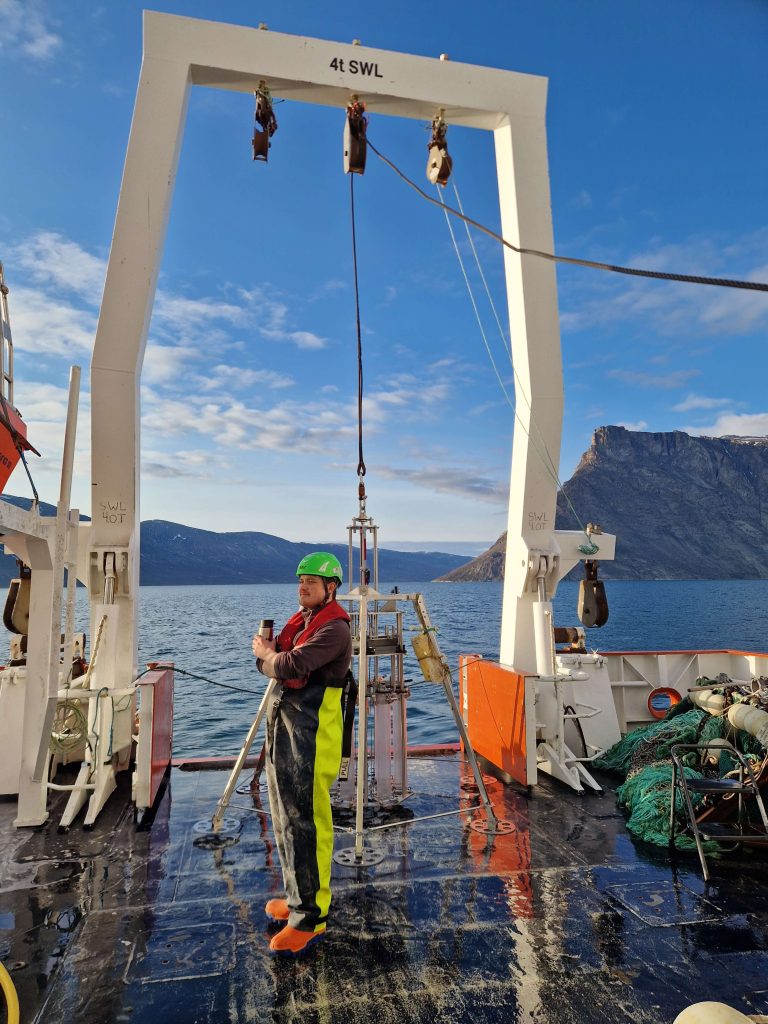
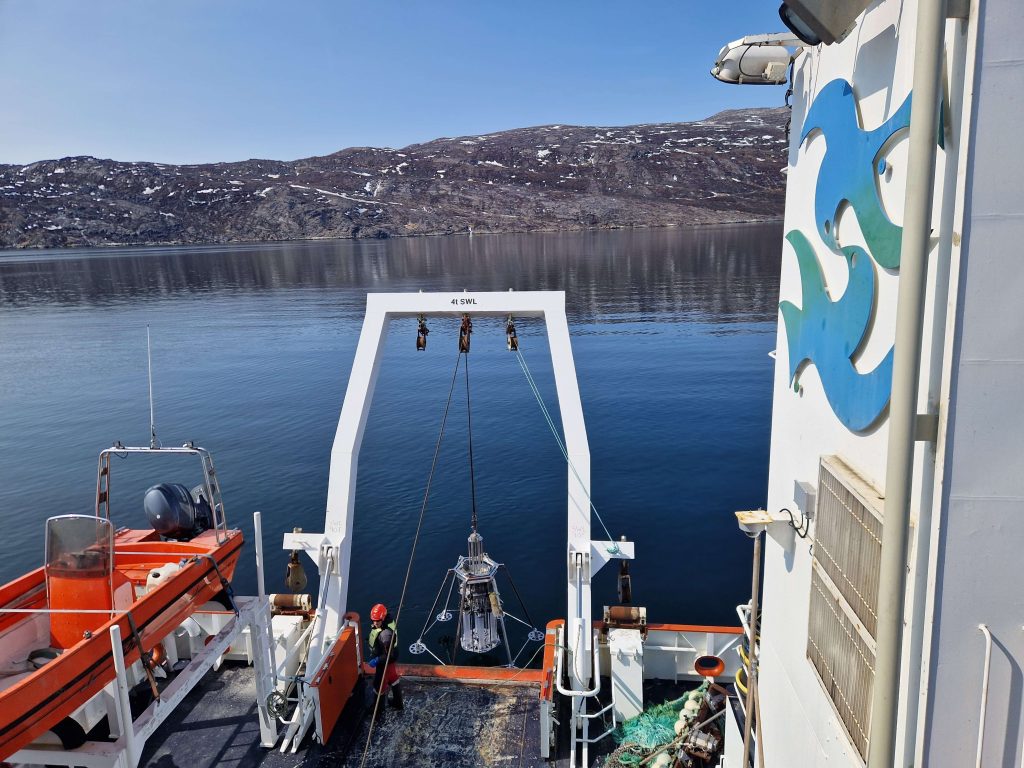
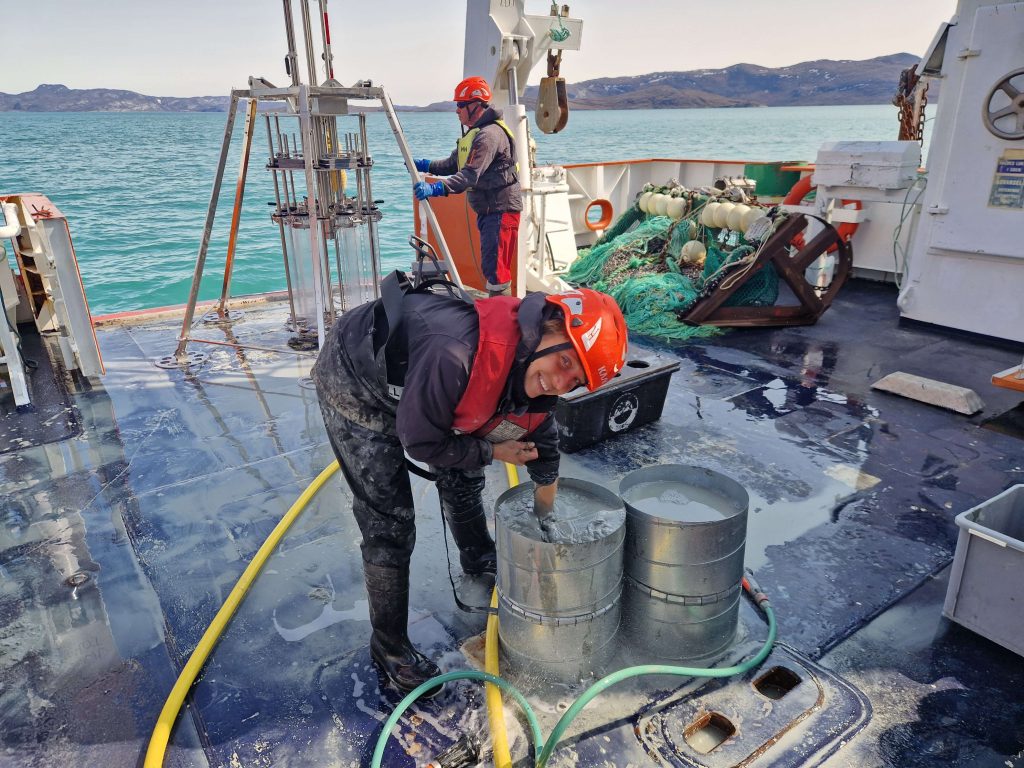
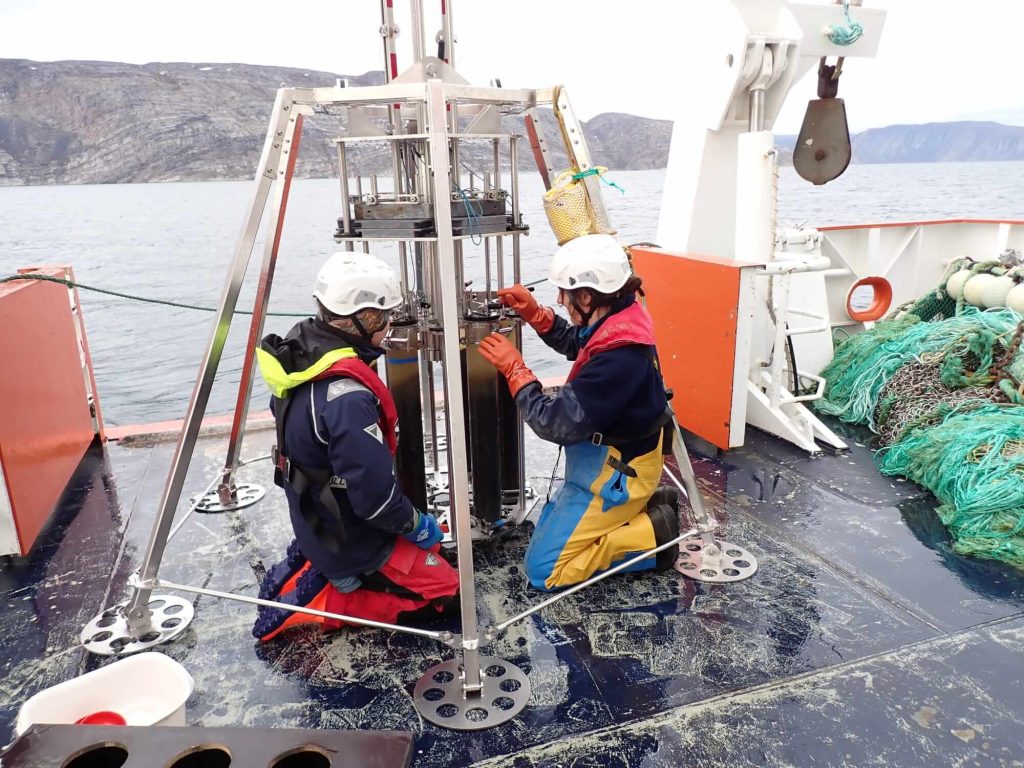
- Infauna: Sediment cores revealed infaunal abundance and community structure.
- Oceanography: Water column profiles and chlorophyll samples provided essential context for understanding productivity and validating remote sensing data.
- Sediment Biogeochemistry: Core samples were analysed for oxygen penetration, porosity, and organic carbon content, contributing directly to POMP’s work on polar blue carbon sinks.
It was a productive and collaborative cruise, with intensive sampling for POMP, the Norwegian Institute for Nature Research (NINA), and Steeve Comeau’s team, and close coordination with Aarhus University. The new data will help fill critical knowledge gaps and feed into ongoing efforts to map and understand the role of polar coastal ecosystems in climate change mitigation.
Stay tuned for more updates on POMP research!